You are using an out of date browser. It may not display this or other websites correctly.
You should upgrade or use an alternative browser.
You should upgrade or use an alternative browser.
How it used to be in’t olden days of racing... 🏍️ 🚗 💨
- Thread starter Exige
- Start date

I never knew Sheene won 2 500cc world championships.. I knew he was cool as fuck (,bit like myself);and smoked way too much ( like I used to); but didn't know that. Bit before my time . I need to watch some old school racing.Barry Sheene Heron Suzuki RG500 1977, the bike that carried him to his second 500cc World Championship, will go to auction in April 2026.
During the 1977 season, Sheene secured multiple Grand Prix wins and dominated the standings with 107 points, confirming the RG500 as one of the most successful bikes of the era.
View attachment 160318

£7750
Yamaha TZ250 TZ250L TZ 250 49V 1984 Race bike HH cylinders Astralite wheels
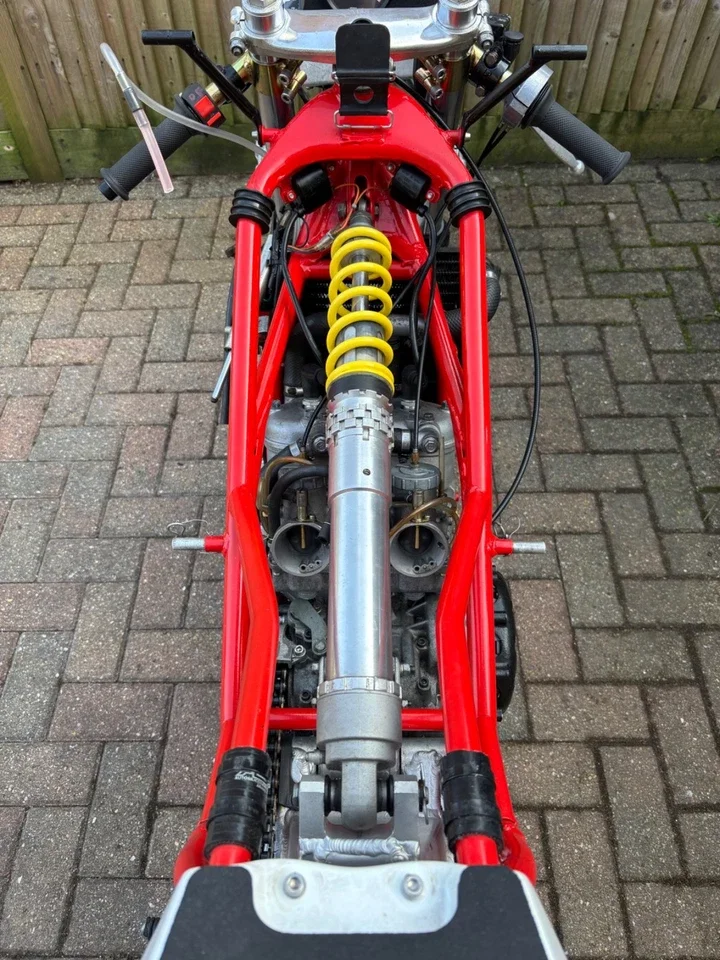
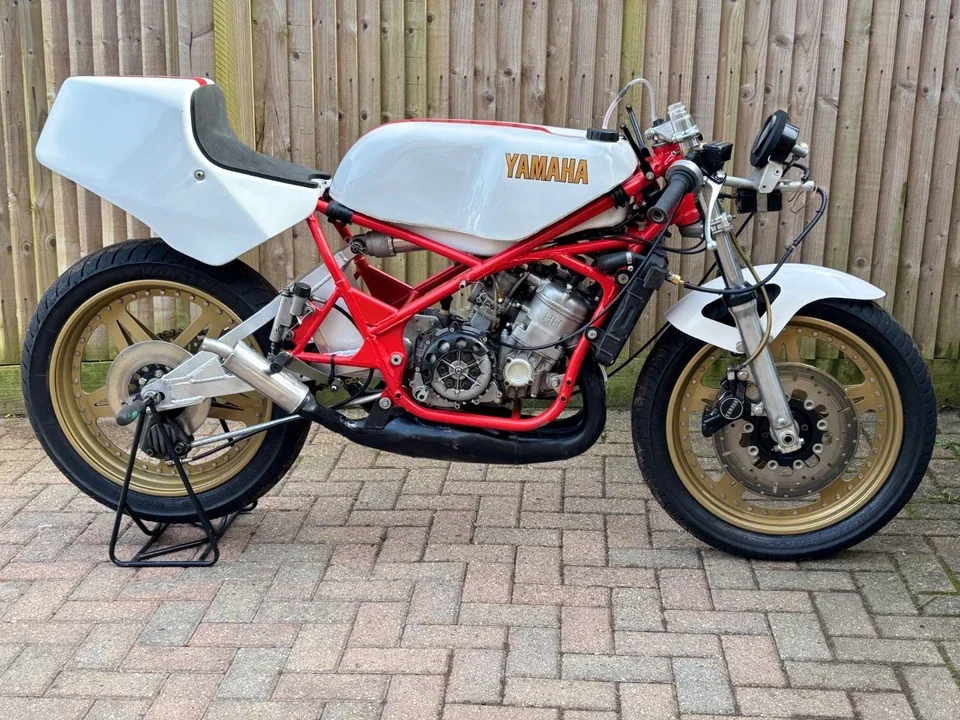
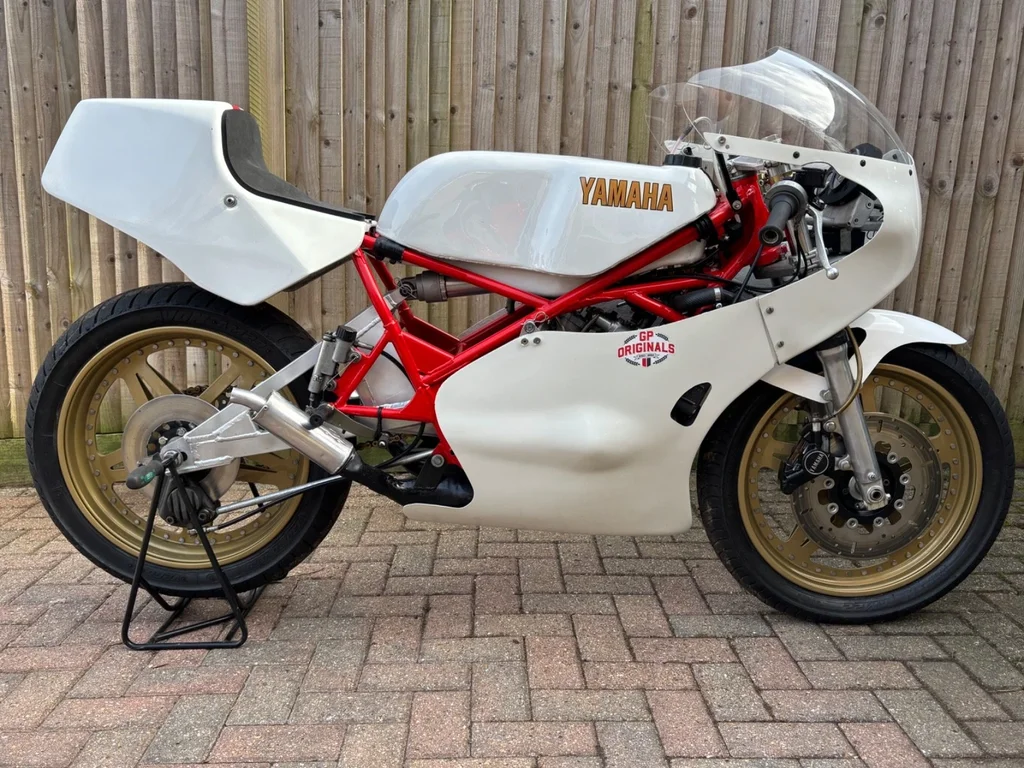
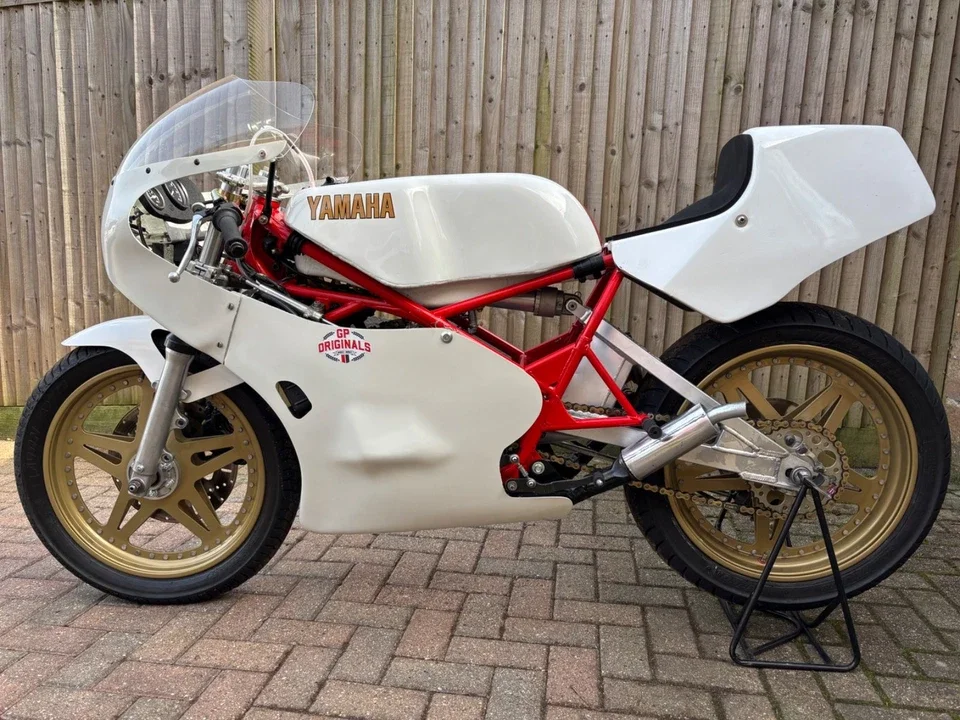
Yamaha TZ250 TZ250L TZ 250 49V 1984 Race bike HH cylinders Astralite wheels
Johnny Cecotto
Johnny Alberto Cecotto Persello, better known as Johnny Cecotto, is a Venezuelan former professional Grand Prix motorcycle racer and auto racer. He rose to prominence as a teenage prodigy in 1975 when he became the youngest motorcycle road racing world champion at the age of 19.
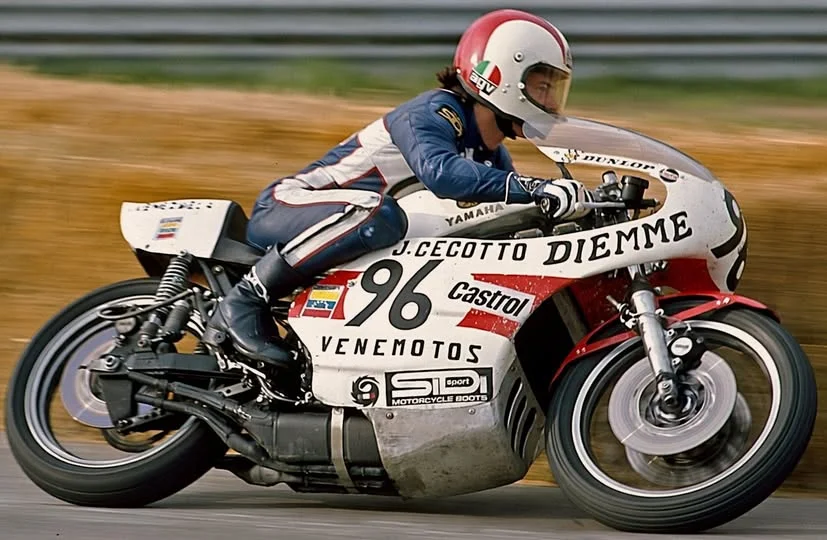
Johnny Alberto Cecotto Persello, better known as Johnny Cecotto, is a Venezuelan former professional Grand Prix motorcycle racer and auto racer. He rose to prominence as a teenage prodigy in 1975 when he became the youngest motorcycle road racing world champion at the age of 19.
Mike the Bike
The machine beneath him is nothing short of engineering brilliance—a factory Honda RC166 or its larger sibling, the RC174.
These weren’t just motorcycles; they were mechanical symphonies.
With six cylinders packed into a tiny displacement, revving beyond 18,000 RPM, they produced a sound unlike anything before or since—a high-pitched howl that defined an era
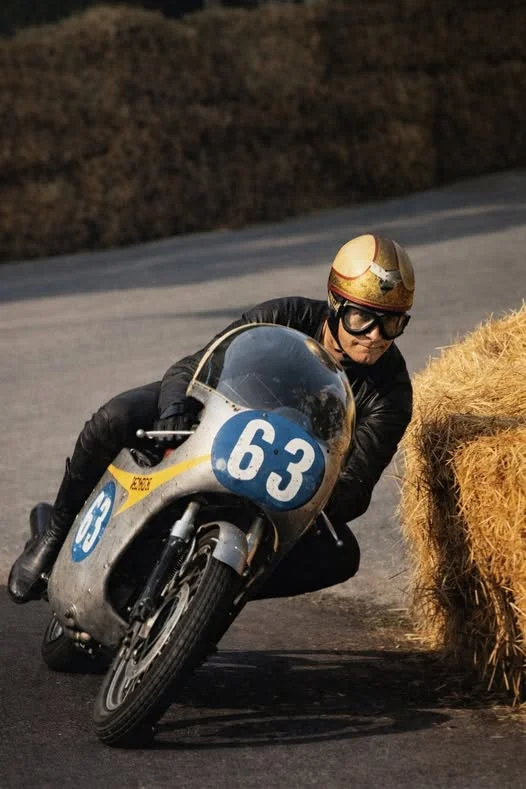
The machine beneath him is nothing short of engineering brilliance—a factory Honda RC166 or its larger sibling, the RC174.
These weren’t just motorcycles; they were mechanical symphonies.
With six cylinders packed into a tiny displacement, revving beyond 18,000 RPM, they produced a sound unlike anything before or since—a high-pitched howl that defined an era
Angel Nieto
1947 - 2017
Nieto was a Spanish motorcycle racer, world champion on 13 occasions (although, due to triskaidekaphobia, Nieto preferred to say that it was 12+1).
Taking into account the absolute number of titles, he has the best record among Spanish motorcyclists and the second in the world after the Italian Giacomo Agostini.
He won 6 world titles in the minor categories, such as the 50cc (1969, 1970, 1972, 1975, 1976 and 1977) and 7 in the 125cc (1971, 1972, 1979, 1981, 1982, 1983 and 1984), conquests that he achieved with five different motorcycle brands (Derbi, Kreidler, Bultaco, Minarelli and Garelli).
In addition, he achieved 4 world runners-up, 23 Spanish championships and 5 Spanish runners-up.
Also part of his record are 90 victories in motorcycle grand prix and 139 podiums, and 128 victories in Spanish championships.
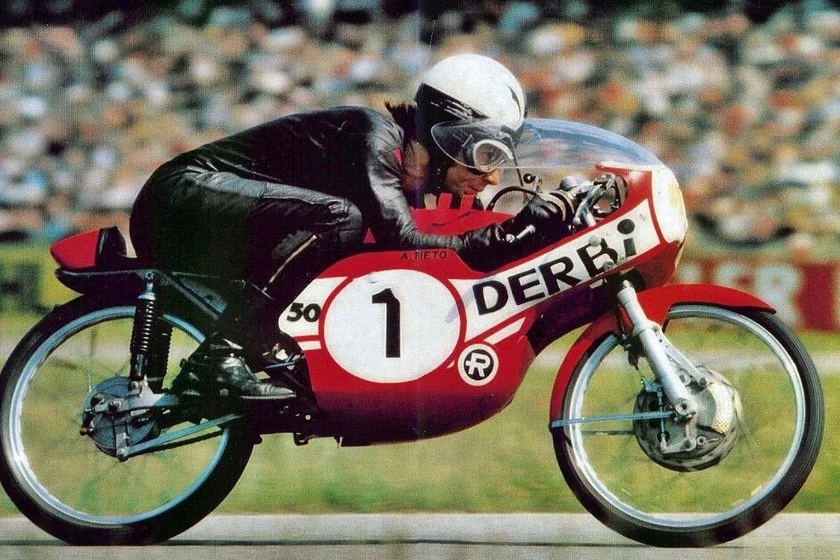
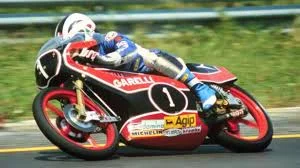
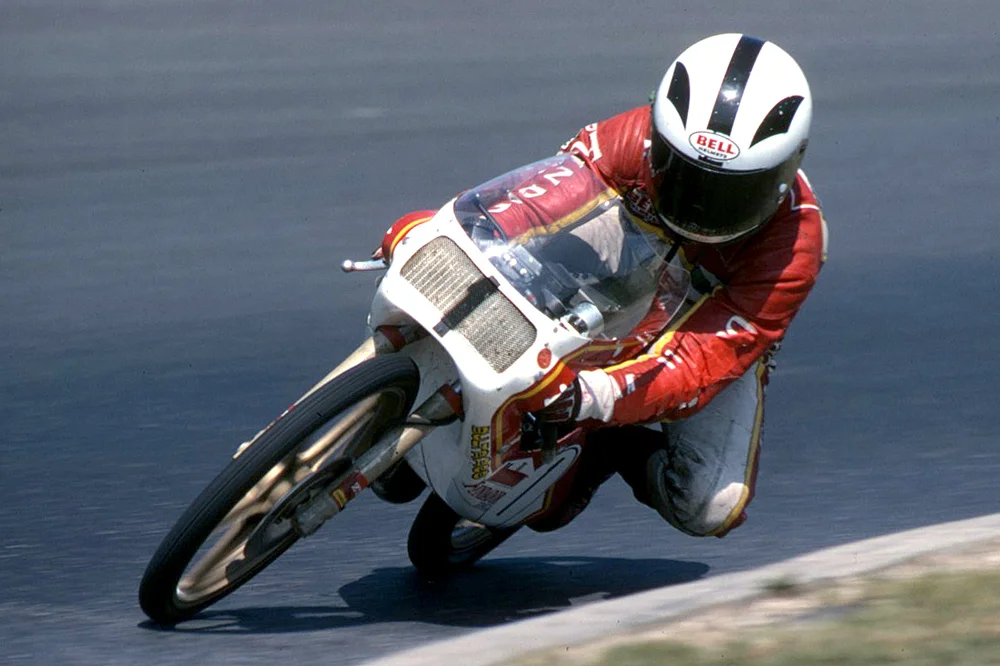
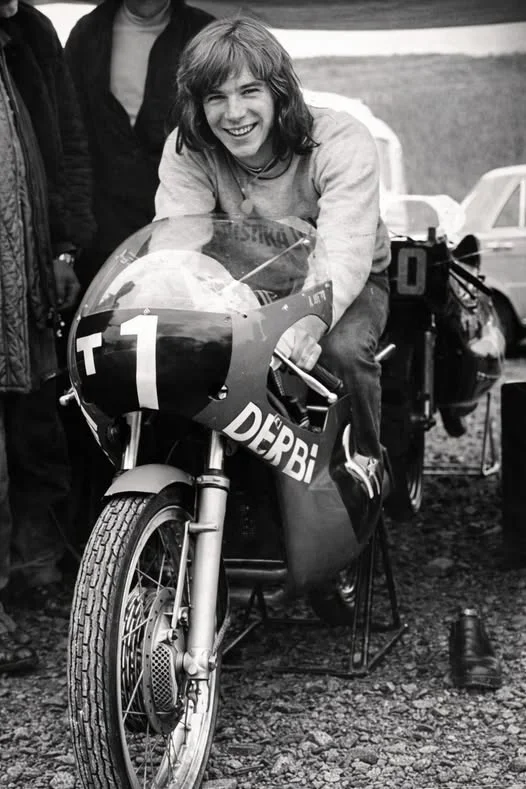
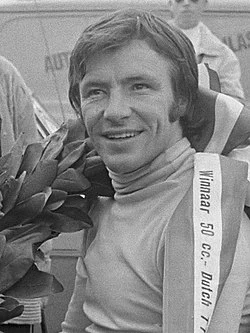
1947 - 2017
Nieto was a Spanish motorcycle racer, world champion on 13 occasions (although, due to triskaidekaphobia, Nieto preferred to say that it was 12+1).
Taking into account the absolute number of titles, he has the best record among Spanish motorcyclists and the second in the world after the Italian Giacomo Agostini.
He won 6 world titles in the minor categories, such as the 50cc (1969, 1970, 1972, 1975, 1976 and 1977) and 7 in the 125cc (1971, 1972, 1979, 1981, 1982, 1983 and 1984), conquests that he achieved with five different motorcycle brands (Derbi, Kreidler, Bultaco, Minarelli and Garelli).
In addition, he achieved 4 world runners-up, 23 Spanish championships and 5 Spanish runners-up.
Also part of his record are 90 victories in motorcycle grand prix and 139 podiums, and 128 victories in Spanish championships.
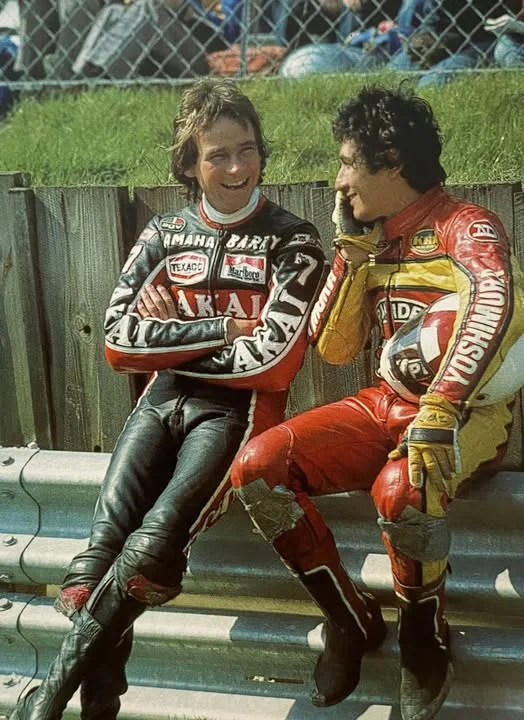
Sheene & Aldana 1980
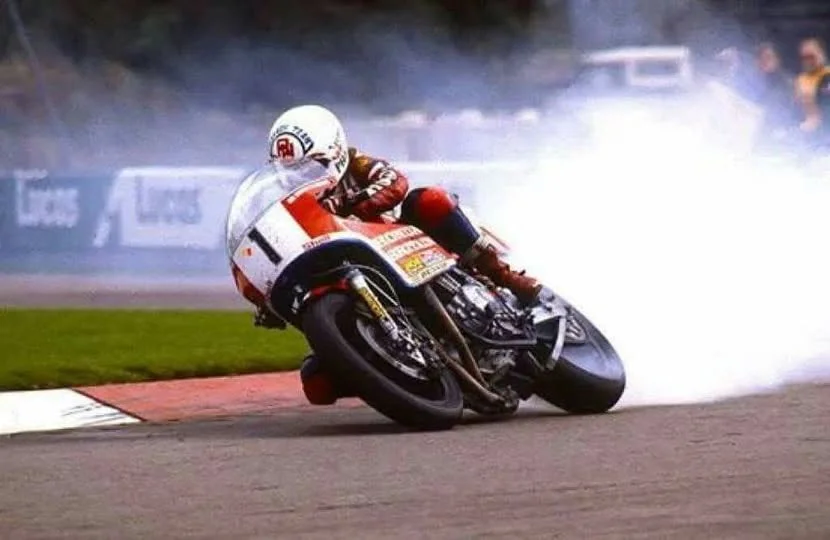
Rocket Ron


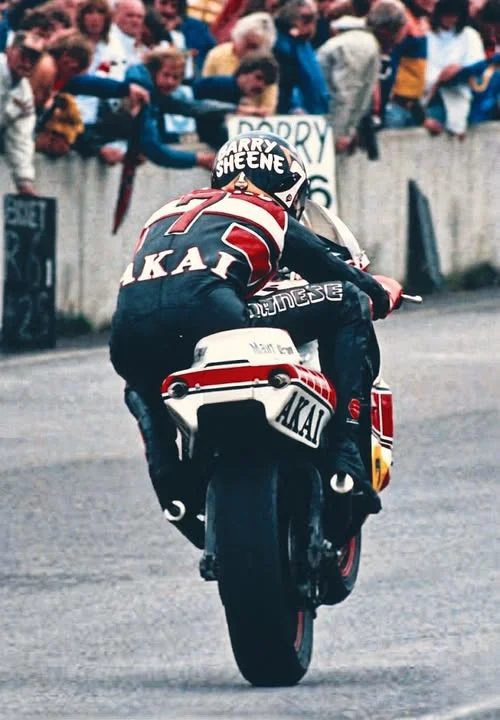
1981
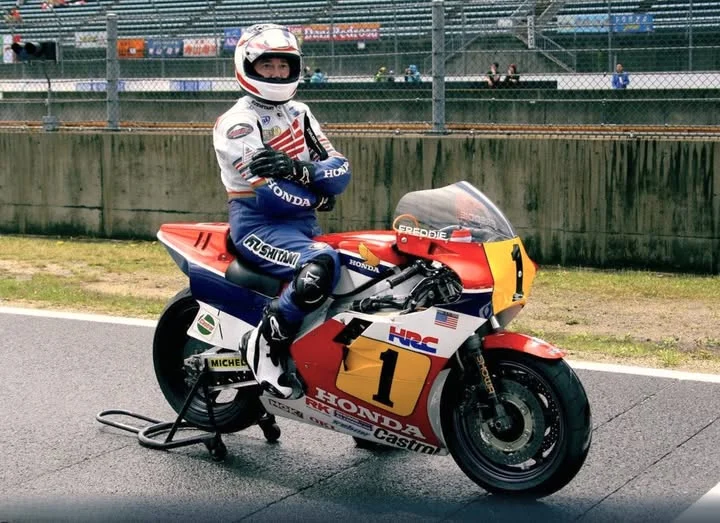
Fast Freddie
Mick Doohan's Repsol Honda NSR500 1998.
The 1998 Honda NSR500 was the ultimate apex predator of the two-stroke era, a 499cc liquid-cooled V4 masterpiece engineered for Mick Doohan’s fifth consecutive world title.
Pumping out a staggering 200 horsepower at 12,000 RPM, this 131kg carbon-and-aluminum missile possessed a power-to-weight ratio that defied physics.
Its true superiority lay in its uncompromising "Screamer" firing order. While rivals retreated to smoother power bands, Doohan demanded this high-revving, violent delivery to maximize mechanical feedback and rear-wheel steering.
The 1998 model excelled via sophisticated Poles electronic ignition and refined Keihin PJ carburretors, optimized for new unleaded fuel regulations without sacrificing its legendary top-end surge.
Coupled with the iconic thumb-operated rear brake for mid-corner stability and a rigid twin-spar chassis, the NSR500 was a precision instrument of dominance.
It wasn't just a motorcycle; this analog monster rewarded Doohan’s bravery with 8 race wins and his legendary fifth World Championship.
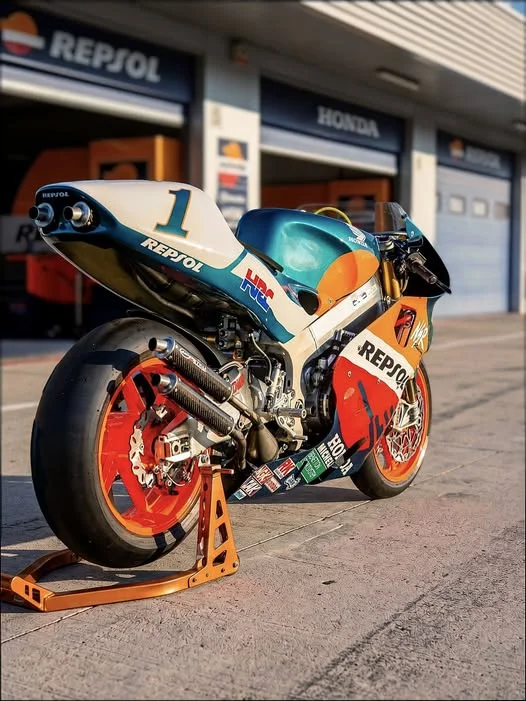
The 1998 Honda NSR500 was the ultimate apex predator of the two-stroke era, a 499cc liquid-cooled V4 masterpiece engineered for Mick Doohan’s fifth consecutive world title.
Pumping out a staggering 200 horsepower at 12,000 RPM, this 131kg carbon-and-aluminum missile possessed a power-to-weight ratio that defied physics.
Its true superiority lay in its uncompromising "Screamer" firing order. While rivals retreated to smoother power bands, Doohan demanded this high-revving, violent delivery to maximize mechanical feedback and rear-wheel steering.
The 1998 model excelled via sophisticated Poles electronic ignition and refined Keihin PJ carburretors, optimized for new unleaded fuel regulations without sacrificing its legendary top-end surge.
Coupled with the iconic thumb-operated rear brake for mid-corner stability and a rigid twin-spar chassis, the NSR500 was a precision instrument of dominance.
It wasn't just a motorcycle; this analog monster rewarded Doohan’s bravery with 8 race wins and his legendary fifth World Championship.

I stopped watching after these bad boys were retired.. I always wore Arai Doohan replica lids im sick I never kept mine when I was youngerMick Doohan's Repsol Honda NSR500 1998.
The 1998 Honda NSR500 was the ultimate apex predator of the two-stroke era, a 499cc liquid-cooled V4 masterpiece engineered for Mick Doohan’s fifth consecutive world title.
Pumping out a staggering 200 horsepower at 12,000 RPM, this 131kg carbon-and-aluminum missile possessed a power-to-weight ratio that defied physics.
Its true superiority lay in its uncompromising "Screamer" firing order. While rivals retreated to smoother power bands, Doohan demanded this high-revving, violent delivery to maximize mechanical feedback and rear-wheel steering.
The 1998 model excelled via sophisticated Poles electronic ignition and refined Keihin PJ carburretors, optimized for new unleaded fuel regulations without sacrificing its legendary top-end surge.
Coupled with the iconic thumb-operated rear brake for mid-corner stability and a rigid twin-spar chassis, the NSR500 was a precision instrument of dominance.
It wasn't just a motorcycle; this analog monster rewarded Doohan’s bravery with 8 race wins and his legendary fifth World Championship.
View attachment 161612

Mac Hobson with Kenny Graham
Mac Hobson and his lpassenger Kenny Birch were both killed during the first lap of the 1978 Isle of Man Tourist Trophy sidecar race, when their 750 cm3 Yamaha-powered Ham-Yam machine, built by Hamilton Motorcycles, crashed at Bray Hill, on Monday, 05 June of that year.
One of the eyewitnesses of the crash was James Neil, a professional passenger who at the time was competing in the World Sidecar Championship with Jock Taylor. Although he was on the island, he did not participate in the race, being substituted by Kenny Arthur, who eventually took overall victory alongside Taylor. According to his testimony on the accident, it was caused by a bump which had appeared in the road next to a manhole cover. Before the start of the race the crews had received a warning about the bump, and yellow paint had been put down to mark it. Less than a minute after the start, Hobson's outfit hit the manhole cover and went completely broadside right before hitting a garden wall and then a lamp post. Both its occupants were killed.
A few minutes later Swiss sidecar pilot Ernst Trachsel would lose his life in a separate accident on Quarterbridge Road at Bray Hill, during the same race.
47-year-old Malcolm Hobson, mostly known as Mac Hobson, had retired from racing after his passenger and close friend John Hartridge was killed in a crash during a race at Darley Moor in October of 1972. But the lure was too great and in 1974 he made a succesful comeback. At the time of his death he and his 19-year younger passenger Birch were in second place in the World Sidecar Championship, behind Rolf Biland-Kenny Williams.
A former British Sidecar Champion, Mac Hobson was a two-time Isle of Man Tourist Trophy race winner, in 1976 with passenger Mick Burns and in 1977 with Stuart Collins. This was the first time he raced with Birch as passenger. Survivors included his wife, Catherine and his three children, Philip, Paul and Nicola. He was buried in Hollywood Avenue Cemetery, Gosforth, metropolitan borough of Newcastle upon Tyne, Tyne and Wear, England.
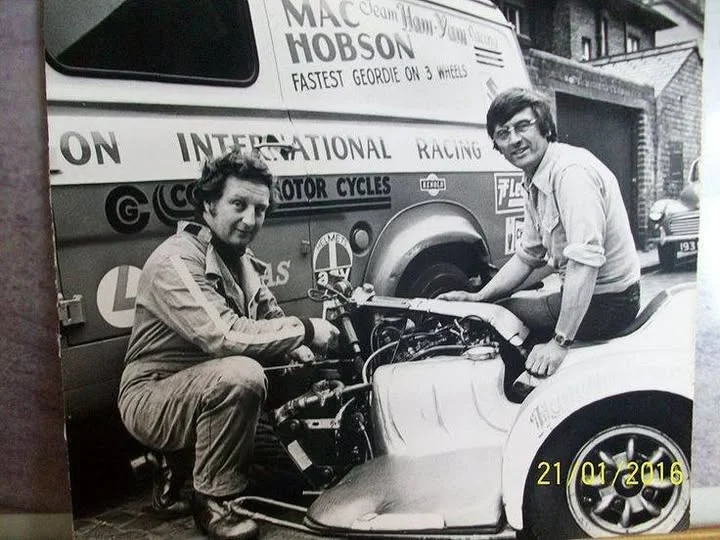
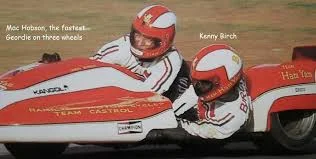
Mac Hobson and his lpassenger Kenny Birch were both killed during the first lap of the 1978 Isle of Man Tourist Trophy sidecar race, when their 750 cm3 Yamaha-powered Ham-Yam machine, built by Hamilton Motorcycles, crashed at Bray Hill, on Monday, 05 June of that year.
One of the eyewitnesses of the crash was James Neil, a professional passenger who at the time was competing in the World Sidecar Championship with Jock Taylor. Although he was on the island, he did not participate in the race, being substituted by Kenny Arthur, who eventually took overall victory alongside Taylor. According to his testimony on the accident, it was caused by a bump which had appeared in the road next to a manhole cover. Before the start of the race the crews had received a warning about the bump, and yellow paint had been put down to mark it. Less than a minute after the start, Hobson's outfit hit the manhole cover and went completely broadside right before hitting a garden wall and then a lamp post. Both its occupants were killed.
A few minutes later Swiss sidecar pilot Ernst Trachsel would lose his life in a separate accident on Quarterbridge Road at Bray Hill, during the same race.
47-year-old Malcolm Hobson, mostly known as Mac Hobson, had retired from racing after his passenger and close friend John Hartridge was killed in a crash during a race at Darley Moor in October of 1972. But the lure was too great and in 1974 he made a succesful comeback. At the time of his death he and his 19-year younger passenger Birch were in second place in the World Sidecar Championship, behind Rolf Biland-Kenny Williams.
A former British Sidecar Champion, Mac Hobson was a two-time Isle of Man Tourist Trophy race winner, in 1976 with passenger Mick Burns and in 1977 with Stuart Collins. This was the first time he raced with Birch as passenger. Survivors included his wife, Catherine and his three children, Philip, Paul and Nicola. He was buried in Hollywood Avenue Cemetery, Gosforth, metropolitan borough of Newcastle upon Tyne, Tyne and Wear, England.

Put the wee smiley Spaniard on that and see what happensMick Doohan's Repsol Honda NSR500 1998.
The 1998 Honda NSR500 was the ultimate apex predator of the two-stroke era, a 499cc liquid-cooled V4 masterpiece engineered for Mick Doohan’s fifth consecutive world title.
Pumping out a staggering 200 horsepower at 12,000 RPM, this 131kg carbon-and-aluminum missile possessed a power-to-weight ratio that defied physics.
Its true superiority lay in its uncompromising "Screamer" firing order. While rivals retreated to smoother power bands, Doohan demanded this high-revving, violent delivery to maximize mechanical feedback and rear-wheel steering.
The 1998 model excelled via sophisticated Poles electronic ignition and refined Keihin PJ carburretors, optimized for new unleaded fuel regulations without sacrificing its legendary top-end surge.
Coupled with the iconic thumb-operated rear brake for mid-corner stability and a rigid twin-spar chassis, the NSR500 was a precision instrument of dominance.
It wasn't just a motorcycle; this analog monster rewarded Doohan’s bravery with 8 race wins and his legendary fifth World Championship.
View attachment 161612

TT 1978
Mick Grant(10) Alex George (9) Tom Herron (8)
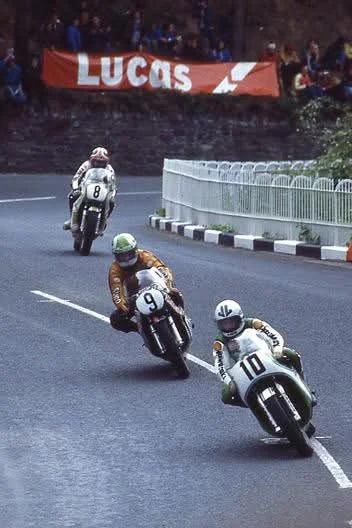
Mick Grant(10) Alex George (9) Tom Herron (8)
The Shay Halifax
Assen 1974 - Ago


1.2M views · 14K reactions | #𝗜𝗺𝗽𝗲𝗿𝗱𝗶𝗯𝗹𝗲 ⭐ 𝙋𝙞𝙡𝙤𝙩𝙤𝙨 𝙙𝙚 𝙁𝟭 𝙧𝙚𝙘𝙤𝙧𝙧𝙚𝙣 𝟭𝟬𝟬 𝙖ñ𝙤𝙨 𝙙𝙚 𝙝𝙞𝙨𝙩𝙤𝙧𝙞𝙖 𝙙𝙚𝙡 𝙠𝙖𝙧𝙩𝙞𝙣𝙜 𝙚𝙣 𝙪𝙣 𝙙𝙚𝙨𝙖𝙛𝙞𝙤 𝙪𝙣𝙞𝙘𝙤: 𝘕𝘰𝘳𝘳𝘪𝘴 𝘷𝘴 𝘚𝘢𝘪𝘯𝘻 Fantástica producción para los amantes del karting, donde en un desafío épico se reunen los piloto de Fórmula 1 𝗟
#𝗜𝗺𝗽𝗲𝗿𝗱𝗶𝗯𝗹𝗲 ⭐ 𝙋𝙞𝙡𝙤𝙩𝙤𝙨 𝙙𝙚 𝙁𝟭 𝙧𝙚𝙘𝙤𝙧𝙧𝙚𝙣 𝟭𝟬𝟬 𝙖ñ𝙤𝙨 𝙙𝙚 𝙝𝙞𝙨𝙩𝙤𝙧𝙞𝙖 𝙙𝙚𝙡 𝙠𝙖𝙧𝙩𝙞𝙣𝙜 𝙚𝙣 𝙪𝙣 𝙙𝙚𝙨𝙖𝙛𝙞𝙤 𝙪𝙣𝙞𝙘𝙤: 𝘕𝘰𝘳𝘳𝘪𝘴 𝘷𝘴 𝘚𝘢𝘪𝘯𝘻 Fantástica producción para los amantes del karting, donde en un desafío épico se reunen los...
 www.facebook.com


Graeme Crosby and Keith Huewen