
You are using an out of date browser. It may not display this or other websites correctly.
You should upgrade or use an alternative browser.
You should upgrade or use an alternative browser.
My Energy supplier has gone bust.
- Thread starter Robarano
- Start date


Switch off your 'puter and it will be zeroIt's a one bed semi house with no wimmin in


Are you sure that's right?I got my yearly statement from sse where they tell you what you used last year and what they forecast from the coming year,
My Electric was 839 kwh last year, predicted to drop to 665 kwh this year but will see the bill rise from £215.51 to £297.62
My Gas was 1,935 kwh last year and now forecast as 2,298kwh this year seeing the price go from £204.19 to £219.59
Suprised at nearly quarter drop in electric proposed but an increase of around £82
That's an average of 2.3kW/h per day... or less that 100W per hour...
Our lowest hourly rate to date is 1.19 and typically its 1.39 at night ("... nearly everything off") and can go above 10 during the day.

Are you in some kind of institution perhapsYep, all correct. I'll put a photo in later, gotta pop out, My water bill for the year was £130 for 12 months


We've 12 tenders/chargers running and 47 other low current wireless devices (according to our wifi map), three freezers, three central heating boilers / pumps, three alarms (one is fire), a few CCTV systems and two electric gates set ups... some trace heaters for exposed water pipes/systems... in background.... a dozen LED security lights.I ain't got all them bike wall chargers exi
... I think I know why I can't get it below 1.2kW/hr.


I fucken knew it, you and Drax are responsible for climate change and the energy crisis.We've 12 tenders/chargers running and 47 other low current wireless devices (according to our wifi map), three freezers, three central heating boilers / pumps, three alarms (one is fire), a few CCTV systems and two electric gates set ups... some trace heaters for exposed water pipes/systems... in background.... a dozen LED security lights.
... I think I know why I can't get it below 1.2kW/hr.
You are a nawty boi!


Only got two on the bikes I run as the YR5 doesn't have a battery - soon to be 3 chargers though in springI ain't got all them bike wall chargers exi
 you don't need one
Do you have a Fischer heater?It's a one bed semi house with no wimmin in

Why have you blanked out your name? We know you are Mr Noobie…
Just fuck off you smug git
Energy bills to rise by 54% a year for millions

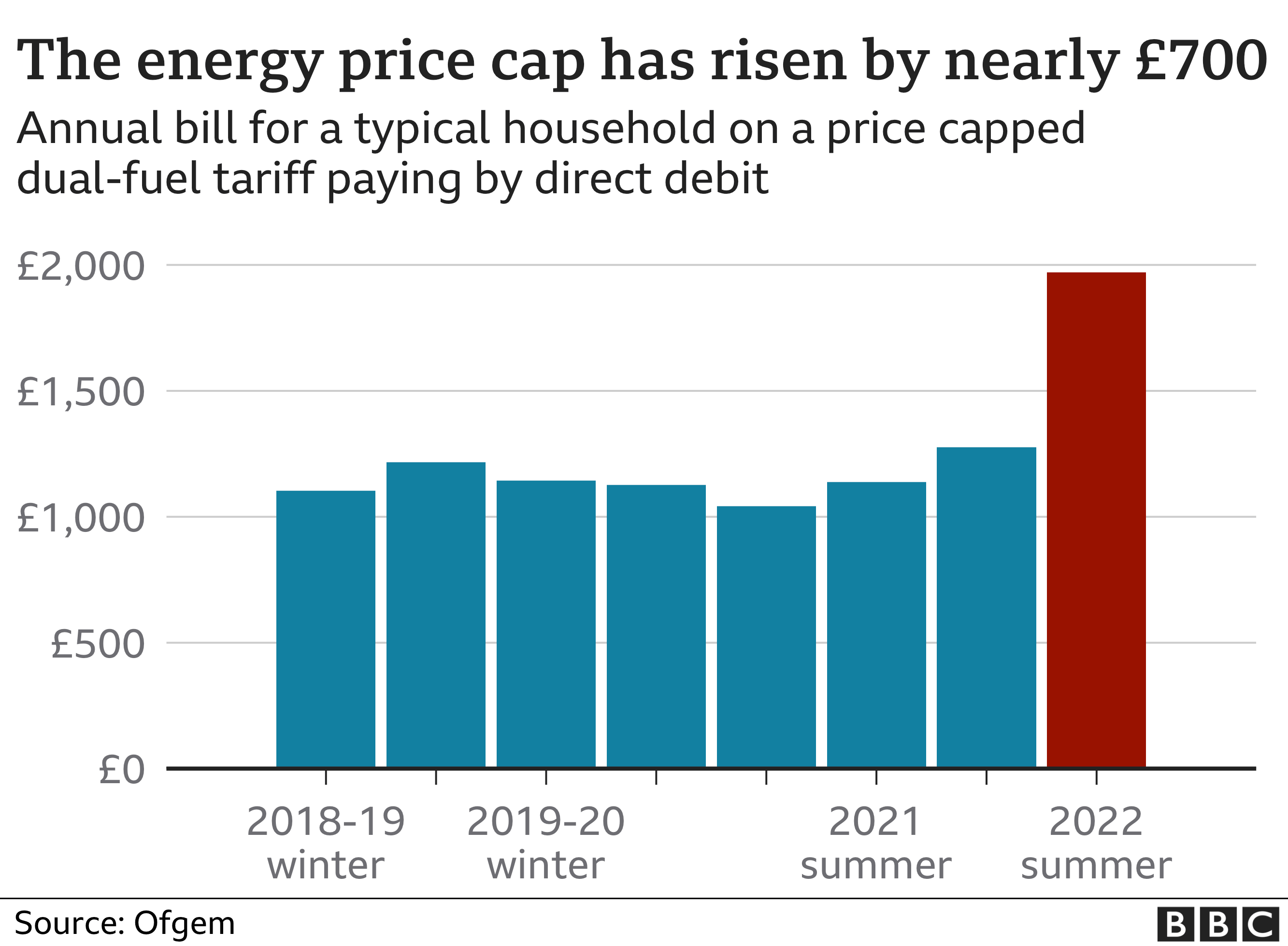
Millions of people will pay an extra £693 a year on their energy bills from April, a rise of 54%, Ofgem has said.
The regulator's new price limit means 18 million households in England, Wales and Scotland will typically pay £1,971 a year for gas and electricity.
Another 4.5 million people on prepayment meters will see an even bigger increase of £708 a year.
Chancellor Rishi Sunak has outlined plans to soften the blow via council tax rebates and help with bills.
This would provide the majority of families with a total of £350 to help them adjust to higher prices, he said.
That will be split, he said, into a £200 rebate on energy bills for households from October, which will be paid back over next five years at £40 per year starting in April 2023. Analysts suggest bills could rise again that month.
Meanwhile, in England, households in council tax bands A to D - information you can find on your bill - will get a £150 discount from April, the chancellor added. Funds for the equivalent discounts would be provided to devolved nations in the UK.
The Bank of England has also increased interest rates from 0.25% to 0.5%, which will make borrowing money more expensive for individuals, but is designed to keep a lid on rising prices.
Soaring energy bills are the key factor in what the Resolution Foundation think-tank has described as a "cost of living catastrophe" facing people across the UK this year.
Can't wait for my £200 loan in October - I wonder how much cocaine £200 buys
Well thank you very much Sunak. 


No discount for Ducati households!!!!
When's the next election?
We’re going to give people a £150 Council Tax rebate to help with the cost of energy, in April – and this discount won’t need to be repaid.
And I do want to be clear with the House that we are deliberately not just giving support to people on benefits... well near enough.
Lots of people on middle incomes!!! are struggling right now, too
- so I’ve decided to provide the council tax rebate to households in Bands A to D.
No discount for Ducati households!!!!
When's the next election?
We’re going to give people a £150 Council Tax rebate to help with the cost of energy, in April – and this discount won’t need to be repaid.
And I do want to be clear with the House that we are deliberately not just giving support to people on benefits... well near enough.
Lots of people on middle incomes!!! are struggling right now, too
- so I’ve decided to provide the council tax rebate to households in Bands A to D.
Last time I got a council tax bill in one of those bands it was a flat - default is band F I thoughtWell thank you very much Sunak.
No discount for Ducati households!!!!
When's the next election?
We’re going to give people a £150 Council Tax rebate to help with the cost of energy, in April – and this discount won’t need to be repaid.
And I do want to be clear with the House that we are deliberately not just giving support to people on benefits... well near enough.
Lots of people on middle incomes!!! are struggling right now, too
- so I’ve decided to provide the council tax rebate to households in Bands A to D.
I'm dreading the next general review / revaluation.Last time I got a council tax bill in one of those bands it was a flat - default is band F I thought
We successful got our band reduced based on the purchase price in '96...
Having spent many times the purchase price on repairs/renovations I know what will happen to the band.
4th February 2022
How much is the new energy price cap per kWh?
The price cap sets the top rate suppliers can charge per unit of gas and electricity.
It is not a cap on customers' overall energy bills, which will still rise or fall depending on energy consumption.
From 1 April, electricity costs are capped at 28p per kWh for electricity and 7p per kWh for gas.
How much is the new energy price cap per kWh?
The price cap sets the top rate suppliers can charge per unit of gas and electricity.
It is not a cap on customers' overall energy bills, which will still rise or fall depending on energy consumption.
From 1 April, electricity costs are capped at 28p per kWh for electricity and 7p per kWh for gas.

Topbox
Well-known member
Mmm. A proper Ducati owner wouldn't be showing such modest bills

TB
He hasn't got oneMmm. A proper Ducati owner wouldn't be showing such modest bills
TB

Energy price cap may be updated every three months, says Ofgem
Great Britain’s regulator says it would allow households to adjust more quickly to market changes
The energy cap on average household energy bills was raised by 54% to £1,971 this week, the biggest increase since the cap was introduced in 2019.
Great Britain’s energy regulator could update the energy price cap as often as every three months as it braces for further volatility across global markets.
Jonathan Brearley, Ofgem’s chief executive, said it would be better to have the option to update the price cap more frequently to allow households to “adjust much more quickly” to some of the changes in the market. Currently, the price cap is reviewed every six months.
Ofgem raised the cap on average household energy bills by 54% to £1,971 on Thursday, the biggest increase since it introduced the cap in 2019. The increase will take effect from April, following the last increase six months before in October.
Soaring household energy bills reflect an extraordinary period on wholesale gas markets, with the cost paid by suppliers quadrupling in the space of a few months amid increased demand during the recovery from the coronavirus pandemic. The oil and gas producer Shell on Thursday announced its highest quarterly profit in eight years.
The increase will hit household budgets at a time when overall consumer price index inflation has risen to a 30-year high, with prices reflecting shortages caused by the coronavirus pandemic.
“What we’re now saying is that we need to look to the future, and the difficult news for all of us is that this volatile market might be with us for some time,” Brearley told BBC Radio 4’s Today programme. “To do that we’ve got to change our entire regulatory package to make sure the market can better adapt.”
He acknowledged that more frequent updates would have meant prices rose more quickly this winter but said equally that customers would see the benefits of price drops more quickly as well.
An Ofgem spokesperson said the regulator was consulting on the changes, which would only come in after October if agreed. Ofgem also confirmed it will have the ability to make further ad hoc changes to the cap in between the regular reviews in “exceptional circumstances” if five tests are met “in the interests of stabilising the market and making sure consumers and suppliers pay a fair price”.
The move would likely help suppliers by allowing them to raise prices more quickly, after the collapse of 29 energy companies, most of whom had not protected themselves sufficiently against wholesale cost increases. The regulator and the government have faced criticism for not introducing measures to prevent the crisis.
About 10% of the rise in bills – about £68 a household – went towards paying for the costs of emergency measures to continue providing gas to customers whose supplier collapsed.
Brearley said suppliers “need to be much more financially resilient” but claimed the best way to avoid a repeat of this winter’s crisis would be to push faster towards increased energy efficiency, renewable energy and nuclear energy.
“Looking into the long term, the real way for the country to get out of the volatility we’ve seen is to diversify our energy sources and push harder on getting towards our net zero target,” Brearley said.

Energy price cap may be updated every three months, says Ofgem
Great Britain’s regulator says it would allow households to adjust more quickly to market changes
The energy cap on average household energy bills was raised by 54% to £1,971 this week, the biggest increase since the cap was introduced in 2019.
Great Britain’s energy regulator could update the energy price cap as often as every three months as it braces for further volatility across global markets.
Jonathan Brearley, Ofgem’s chief executive, said it would be better to have the option to update the price cap more frequently to allow households to “adjust much more quickly” to some of the changes in the market. Currently, the price cap is reviewed every six months.
Ofgem raised the cap on average household energy bills by 54% to £1,971 on Thursday, the biggest increase since it introduced the cap in 2019. The increase will take effect from April, following the last increase six months before in October.
Soaring household energy bills reflect an extraordinary period on wholesale gas markets, with the cost paid by suppliers quadrupling in the space of a few months amid increased demand during the recovery from the coronavirus pandemic. The oil and gas producer Shell on Thursday announced its highest quarterly profit in eight years.
The increase will hit household budgets at a time when overall consumer price index inflation has risen to a 30-year high, with prices reflecting shortages caused by the coronavirus pandemic.
“What we’re now saying is that we need to look to the future, and the difficult news for all of us is that this volatile market might be with us for some time,” Brearley told BBC Radio 4’s Today programme. “To do that we’ve got to change our entire regulatory package to make sure the market can better adapt.”
He acknowledged that more frequent updates would have meant prices rose more quickly this winter but said equally that customers would see the benefits of price drops more quickly as well.
An Ofgem spokesperson said the regulator was consulting on the changes, which would only come in after October if agreed. Ofgem also confirmed it will have the ability to make further ad hoc changes to the cap in between the regular reviews in “exceptional circumstances” if five tests are met “in the interests of stabilising the market and making sure consumers and suppliers pay a fair price”.
The move would likely help suppliers by allowing them to raise prices more quickly, after the collapse of 29 energy companies, most of whom had not protected themselves sufficiently against wholesale cost increases. The regulator and the government have faced criticism for not introducing measures to prevent the crisis.
About 10% of the rise in bills – about £68 a household – went towards paying for the costs of emergency measures to continue providing gas to customers whose supplier collapsed.
Brearley said suppliers “need to be much more financially resilient” but claimed the best way to avoid a repeat of this winter’s crisis would be to push faster towards increased energy efficiency, renewable energy and nuclear energy.
“Looking into the long term, the real way for the country to get out of the volatility we’ve seen is to diversify our energy sources and push harder on getting towards our net zero target,” Brearley said.
The end of fixed price deals perhaps ?
We’re on a deal until March 2023, wouldn’t be surprised if it becomes a thing of the past.
Oh well, as long as these private (foreign) companies keep making billions.


Shareholders?The end of fixed price deals perhaps ?
We’re on a deal until March 2023, wouldn’t be surprised if it becomes a thing of the past.
Oh well, as long as these private (foreign) companies keep making billions.

Actually, EDF who own a lot of UK power generation/distribution infrastructure are making a loss at present. Why? Because the French Govt have dealt with the issue properly (as far as the people are concerned - and never forget the people vote not companies) they simply said “Non” to any attempt by any French Co to increase prices.
In the UK and here in ROI they Govt’s are pissing into the wind by offering a tiny (for each householder but massive for the taxpayer in totality) rebate. The taxpayer pays again.
In the UK and here in ROI they Govt’s are pissing into the wind by offering a tiny (for each householder but massive for the taxpayer in totality) rebate. The taxpayer pays again.

Exactly but here they can’t do that because share holders of the big companies are big sponsors of the Tory party gov, so don’t expect any measure that would effect shareholders and family and friends of the Tory. Gov, much better that the taxpayer pays and suffer , because non of the millionaire clan surrounding them pays any tax, so all goodActually, EDF who own a lot of UK power generation/distribution infrastructure are making a loss at present. Why? Because the French Govt have dealt with the issue properly (as far as the people are concerned - and never forget the people vote not companies) they simply said “Non” to any attempt by any French Co to increase prices.
In the UK and here in ROI they Govt’s are pissing into the wind by offering a tiny (for each householder but massive for the taxpayer in totality) rebate. The taxpayer pays again.

Topbox
Well-known member
Actually, EDF who own a lot of UK power generation/distribution infrastructure are making a loss at present. Why? Because the French Govt have dealt with the issue properly (as far as the people are concerned - and never forget the people vote not companies) they simply said “Non” to any attempt by any French Co to increase prices.
In the UK and here in ROI they Govt’s are pissing into the wind by offering a tiny (for each householder but massive for the taxpayer in totality) rebate. The taxpayer pays again
It's not a rebate.
As Martin Lewis says it's a negative levy in year one and a positive levy for the next 4 years.
It's possible for a non bill payer this year who does not get the £200 and becomes a bill payer for the next 4 years will have to pay £40 per year for 4 years.
There is no subsidy.
So if energy prices don't come down they effectively made matters worse for 4 years.
TB